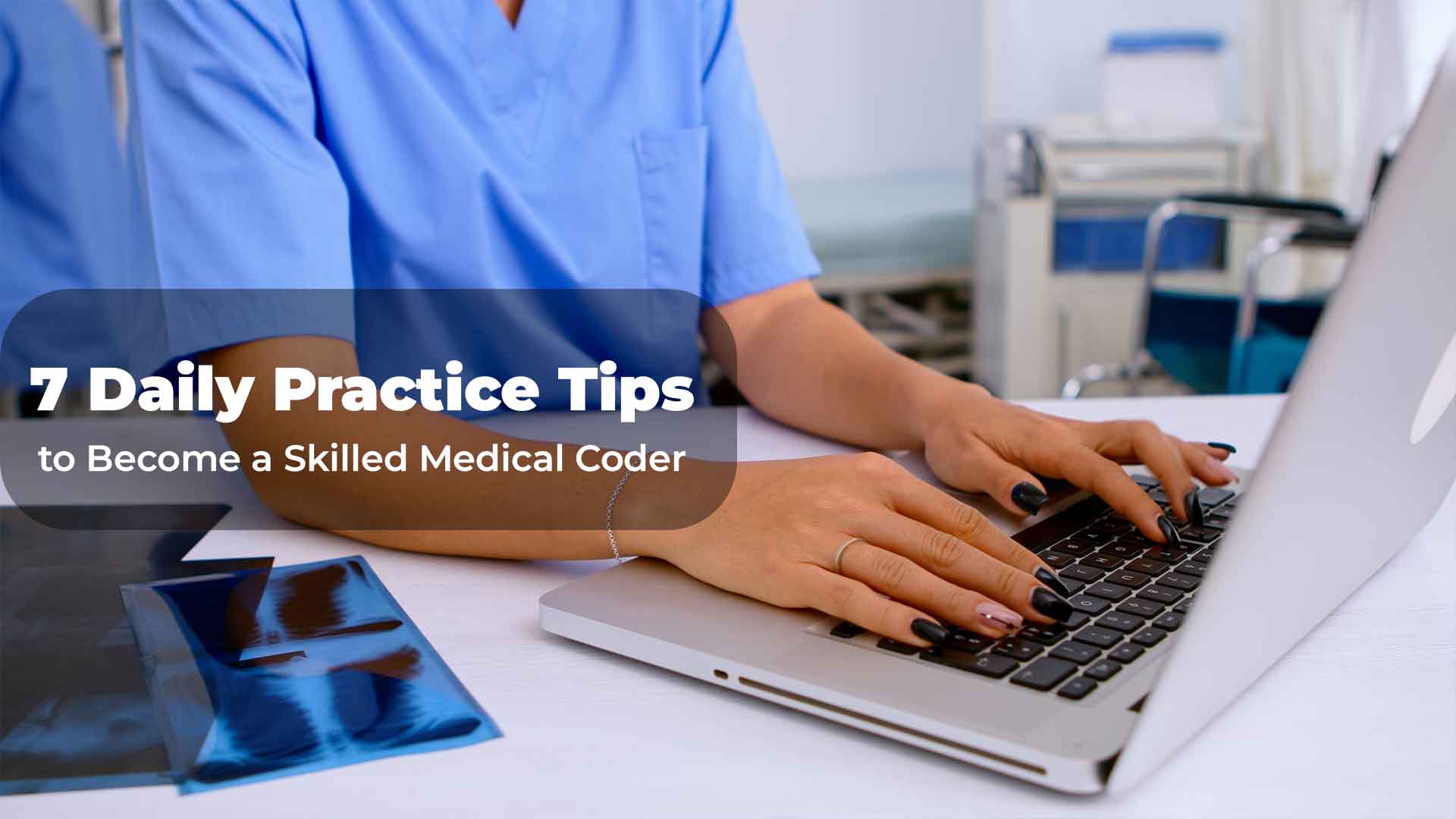
Medical coding is a skill-based profession that requires accuracy, consistency, and strong analytical ability. Whether you are preparing for certifications like CPC or CRC offered by AAPC, or aiming to build a long-term healthcare career, daily practice plays a crucial role in your success.
Becoming a skilled medical coder does not happen overnight. It requires disciplined practice and structured learning. Here are 7 daily practice tips that can help you improve your coding knowledge and become job-ready.
1. Practice Medical Coding Every Day
Consistency is key in medical coding. Spend at least 1–2 hours daily practicing:
- Diagnosis coding (ICD)
- Procedure coding (CPT)
- Case-based coding scenarios
Daily practice improves speed and reduces coding errors.
2. Review Medical Terminology Regularly
Understanding medical terminology helps you interpret clinical documentation correctly. Revise:
- Disease names
- Surgical procedures
- Body systems
- Common medical abbreviations
Strong terminology knowledge increases coding accuracy.
3. Study Anatomy and Physiology
A skilled medical coder understands how body systems function. Spend time learning different body systems such as:
- Cardiovascular system
- Respiratory system
- Digestive system
This knowledge helps you choose accurate diagnosis and procedure codes.
4. Read Coding Guidelines Daily
Coding guidelines are the foundation of accurate coding. Make it a habit to read official ICD and CPT guidelines every day.
Understanding guidelines prevents common coding mistakes and improves exam performance.
5. Analyze Real Medical Records
Practice reviewing sample medical records to improve documentation analysis skills.
Ask yourself:
- What is the main diagnosis?
- What procedures were performed?
- Are there any complications?
This habit improves your analytical thinking.
6. Take Short Practice Tests
Daily mini-tests or weekly mock exams help:
- Improve time management
- Identify weak areas
- Boost exam confidence
Track your progress and focus on improving weak topics.
7. Improve Communication and Soft Skills
Medical coding professionals must communicate clearly with healthcare teams and employers. Improving soft skills helps in interviews and job placements.
Focus on:
- Spoken English
- Professional communication
- Resume building
- Interview preparation
Strong communication skills increase your job opportunities.
Why Daily Practice is Important in Medical Coding
Medical coding is not just about memorizing codes. It requires:
- Attention to detail
- Logical thinking
- Understanding of medical documentation
- Compliance with coding rules
Regular practice builds confidence and prepares you for certification exams and real job environments.
Build Your Career with Global Coding Academy
If you want structured training and expert guidance to become a skilled medical coder, Global Coding Academy provides comprehensive medical coding training designed for beginners and career seekers.
Course Duration
126 Hours (3 Hours per day – 42 classes)
Batches
Weekdays and Weekend Batch
Weekdays
Monday to Thursday: 3 hours from 10:00 AM to 1:00 PM
or
04:00 PM to 7:00 PM
Saturday: 10:00 AM to 5:00 PM
Weekend
Saturday and Sunday: 6 hours from 10:00 AM to 5:00 PM
Language
Tamil & English
Soft Skills Training
- Spoken English
- Personality Development
- Interview Preparation
- Resume Preparation
By following these 7 daily practice tips and receiving proper training, you can improve your coding accuracy, pass certification exams confidently, and build a successful career in medical coding.