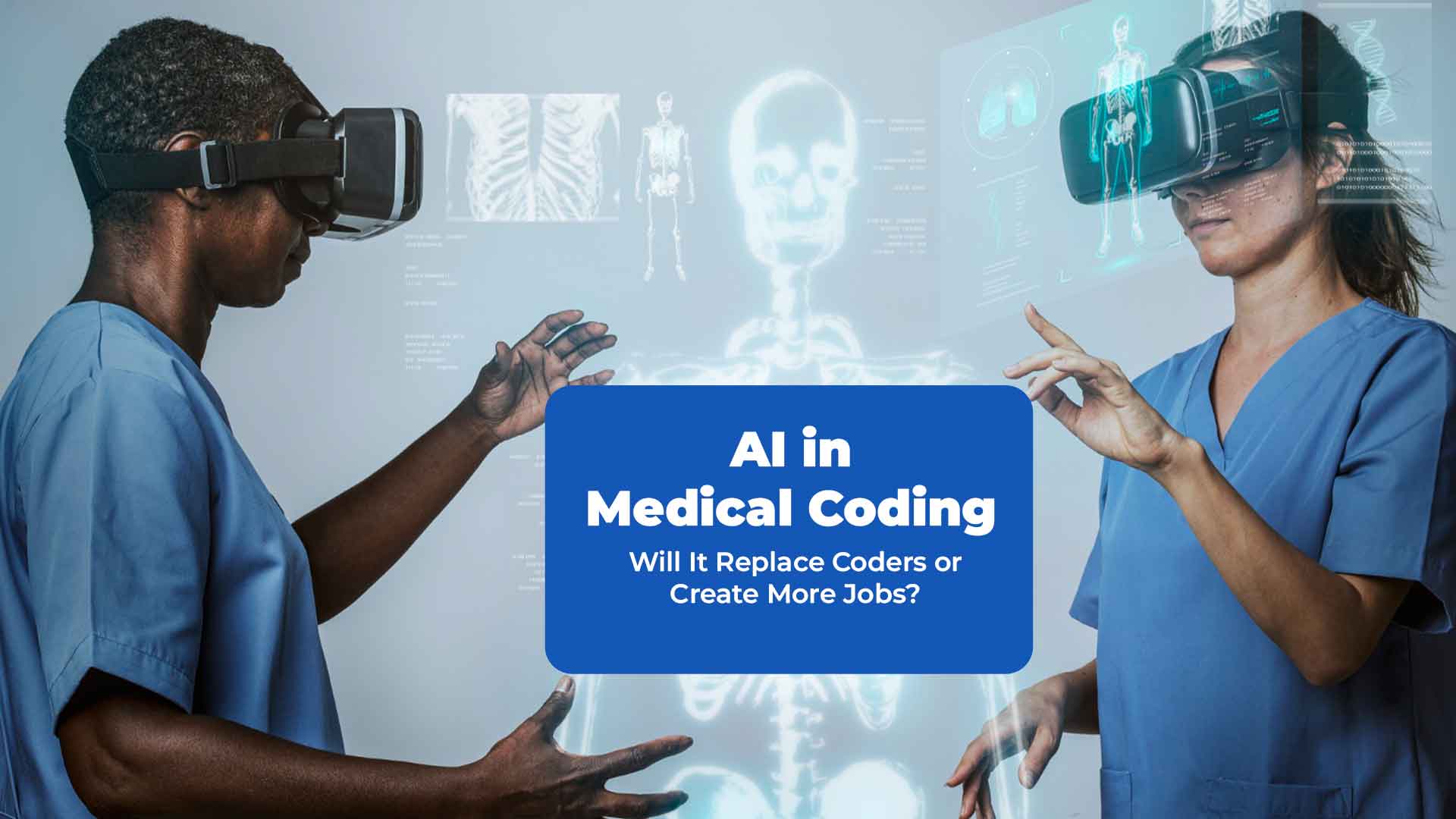
Artificial Intelligence (AI) is rapidly transforming the healthcare industry, including medical coding. Many students and professionals are now asking an important question: Will AI replace medical coders, or will it create more job opportunities?
Medical coding certifications offered by organizations like AAPC continue to be in high demand, even as technology evolves.
In this blog, let’s clearly understand the impact of AI on medical coding careers.
🤖 What is AI in Medical Coding?
AI in medical coding refers to the use of software and automation tools to:
- Analyze medical records
- Suggest diagnosis and procedure codes
- Improve coding speed
- Reduce manual errors
These tools use technologies like machine learning and natural language processing (NLP) to understand clinical documentation.
⚠️ Will AI Replace Medical Coders?
The short answer is: No, AI will not completely replace medical coders.
Here’s why:
1. Human Judgment is Still Required
Medical coding involves understanding complex patient records, clinical context, and guidelines. AI cannot fully replace human decision-making.
2. Coding Guidelines Change Frequently
Medical coding rules and regulations are updated regularly. Human coders are needed to interpret and apply these changes accurately.
3. Error Checking and Auditing
AI tools can make mistakes. Skilled coders are required to review, validate, and correct codes.
👉 Conclusion: AI will assist coders, not replace them.
🚀 Will AI Create More Jobs in Medical Coding?
Yes, AI is actually creating new career opportunities in the healthcare and MedTech industry.
New Job Roles Emerging:
- AI-assisted Medical Coder
- Medical Coding Auditor
- Healthcare Data Analyst
- Risk Adjustment Coder
- Clinical Documentation Specialist
As healthcare becomes more digital, the demand for skilled professionals who can work with AI tools is increasing.
📈 Advantages of AI in Medical Coding
AI is improving the medical coding process in several ways:
- Faster coding process
- Reduced manual workload
- Improved accuracy
- Better data analysis
- Increased productivity
This allows coders to focus on complex cases and high-value tasks.
⚡ Skills You Need for the Future
To succeed in the AI-driven medical coding field, you should focus on:
Technical Skills
- ICD and CPT coding
- Risk adjustment coding
- Medical documentation review
Advanced Skills
- Understanding AI tools
- Data analysis basics
- Healthcare compliance
Soft Skills
- Communication
- Problem-solving
- Analytical thinking
🎯 Why Medical Coding is Still a Safe Career
Even with AI growth, medical coding remains a strong career because:
- Healthcare industry is always growing
- Coding accuracy is critical for billing
- Human expertise is still required
- Certifications are still valuable
Professionals with certifications and updated skills will continue to be in high demand.
🎓 Build Your Future with Global Coding Academy
If you want to prepare for future-ready medical coding careers, proper training is essential.
Course Duration
126 Hours (3 Hours per day – 42 classes)
Batches
Weekdays and Weekend Batch
Weekdays
Monday to Thursday: 3 hours from 10:00 AM to 1:00 PM
or
04:00 PM to 7:00 PM
Saturday: 10:00 AM to 5:00 PM
Weekend
Saturday and Sunday: 6 hours from 10:00 AM to 5:00 PM
Language
Tamil & English
Soft Skills Training
- Spoken English
- Personality Development
- Interview Preparation
- Resume Preparation
✅ Conclusion
AI is not a threat to medical coders—it is an opportunity. While automation tools are improving efficiency, they cannot replace human expertise in healthcare documentation and coding.
Instead, AI is creating more specialized and higher-paying roles in medical coding and healthcare technology.
By learning the right skills and adapting to new technologies, you can build a future-proof career in medical coding and MedTech.